This past week Scott Adams, the creator of Dilbert, died of prostate cancer. He was 68.
This is not an obituary post as I never met him, but I did exchange several e-mails with him over time. The first was in September of 2009 and the last was about six years later.
The longest correspondence I had with him concerned a rude joke. I really thought the joke was funny even if it was off-color, and the humor was built on a play of words. It was one of those jokes that takes about a half second to get as the punchline goes in an entirely different direction than you would think.
It’s too rude to post here but he thought it was funny and tightened up the dialog a bit to make it better.
I, like many people in the tech workforce in the 1990s and 2000s, identified with Dilbert. Me even more so since my first job out of college was with Northern Telecom. Adams worked at Pacific Bell, and they were a customer of ours along with “Baby Bells” like NYNEX and BellSouth. The cubical hell he lived in was identical to mine.
I’m not here to reflect on the life of Scott Adams. Others are doing a much better job than me, and were also more vested in Adams’s work than I was. His comics made me laugh, some of his other writing made me think, but he didn’t rise to the level of “hero” in my life. If I had to choose a comic strip creator as my hero it would be Bill Watterson. He and Adams are very different people.
But what I did want to talk about is this idea of “never meet your heroes”. Is it possible to divorce creative work from its creator?
I kind of understood a lot of what Adams did outside of drawing, although it makes me a bit sad. I was a chubby geek in a small southern town, where having a home computer was enough to get you in the local newspaper. You know where this is going, right?
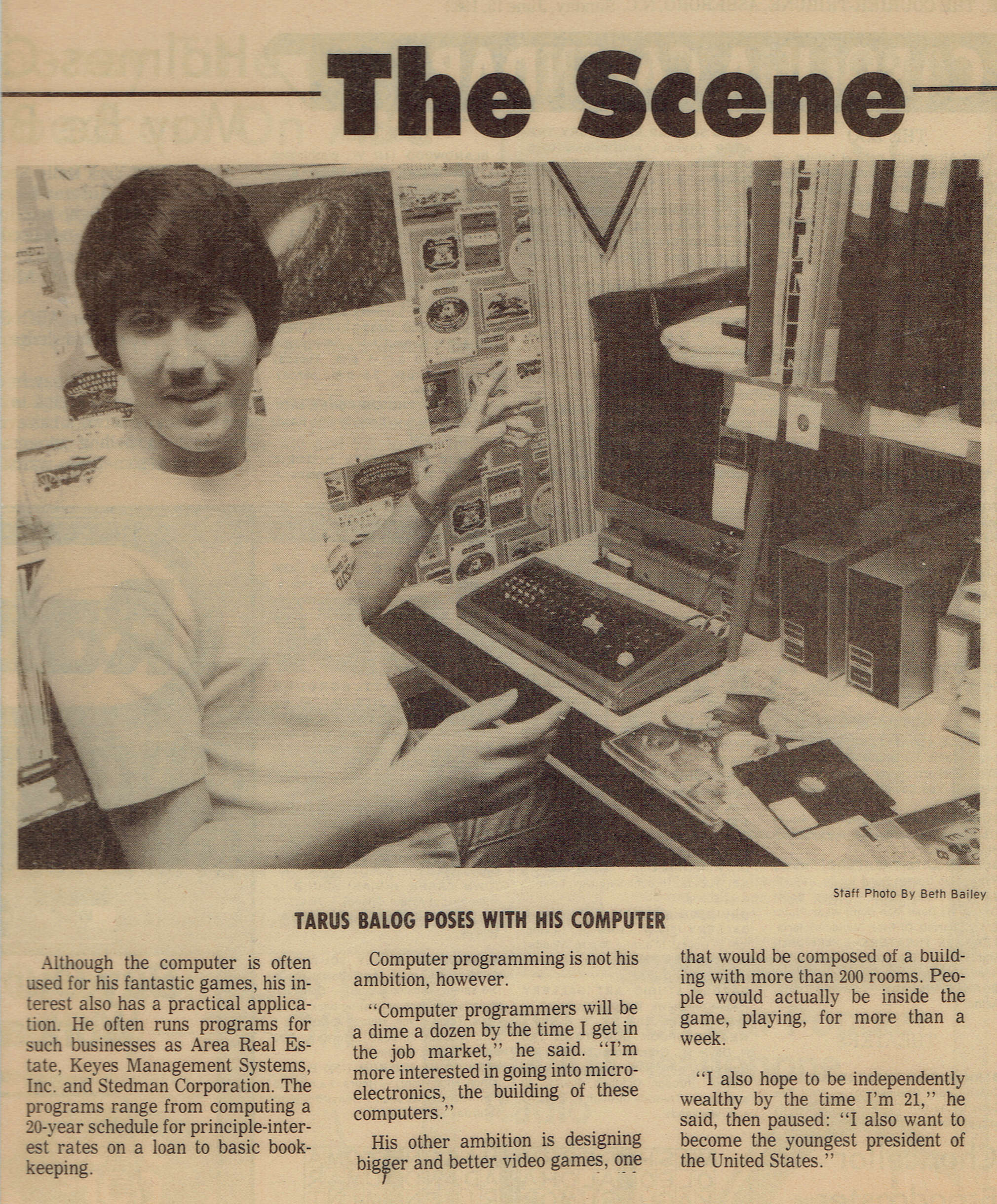
Yes, I was such a hit with the ladies.
Actually, I was often bullied and ostracized for actually liking my classes, reading a lot and having a computer. I was never good at sports, and like many kids my age I was jealous of the good-looking jocks who got to date the cheerleaders.
Luckily for me, I got to go to the North Carolina School of Science and Math where I was still weird, but less so. I lost weight, improved my social skills and learned that being a jock and dating a cheerleader was not the be-all and end-all of everything.
Some people never grow out of it, though. Adams probably grew up in a similar situation to mine, and when he became financially successful he did what a lot of geeks do: he got divorced and started dating the young woman next door.
One of the saddest things he ever wrote was a story he related of a billionaire friend of his. This guy asked a woman out on a date, and when she showed up at his house he asked “do you want to have sex before or after dinner?”. Adams thought this was so cool. To him it seemed to embody success. To me it was a bit horrifying. It turned something that should be wonderful into a transaction.
Adams, like most of us, can’t do much about how we look, but he did work hard on his physical health. He came across as a gym rat, and one piece of advice he gave really resonated with me. He would allow himself to skip a workout, but he had to get dressed into his gym clothes and go to the gym. If he got there and didn’t feel like it, he allowed himself to go home, but most of the time he stayed. It was an interesting life hack.
Adams really personified “tech-bro culture”. They equate success with money and assume that by having money they are obviously superior to everyone else. I am driven by money as much as the next person, and I make moral compromises in the name of money, but to me it is more to secure my retirement and my family’s future than to elevate myself above others.
That is another thing about going to Science and Math that changed me. In high school all I pretty much wanted to do was drink beer and kiss girls, while my classmates were off building space shuttles out of disused kitchen appliances. It allowed me to see that it was okay not to be as wealthy or as attractive or as successful as my classmates - I still had a lot to offer and a path to my own happiness.
I don’t think Adams ever got that.
Anyway, getting back to my premise, a lot of creators I like are not nice people. The first one I came across was Orson Scott Card. Like many young geeks, Ender’s Game was a favorite, but I find many of his views abhorrent. It is also a bit weird that he lives fairly close to me.
Authors like JK Rowling and Neil Gaiman have also disappointed me in their non-professional lives, and I really liked the early work of the comedian Louis CK. I’m sure there are others as well but this post is long enough as it is.
I’m trying to decide how I should deal with learning that someone whose work I admire is not a nice person, and I haven’t been able to come up with any single rule. My views on Dilbert haven’t changed much with the death of Adams, although I made sure to never do anything that would enrich him after his comments about Black people. We all kind of knew he was an asshole.
Gaiman is harder. When I come across his work now I just feel kind of dirty. Books like Neverwhere and American Gods are high on my list of favorite fiction, but I haven’t been back to them. Heck, I used to carry around a 1922 Peace Dollar but now it lives in a drawer.
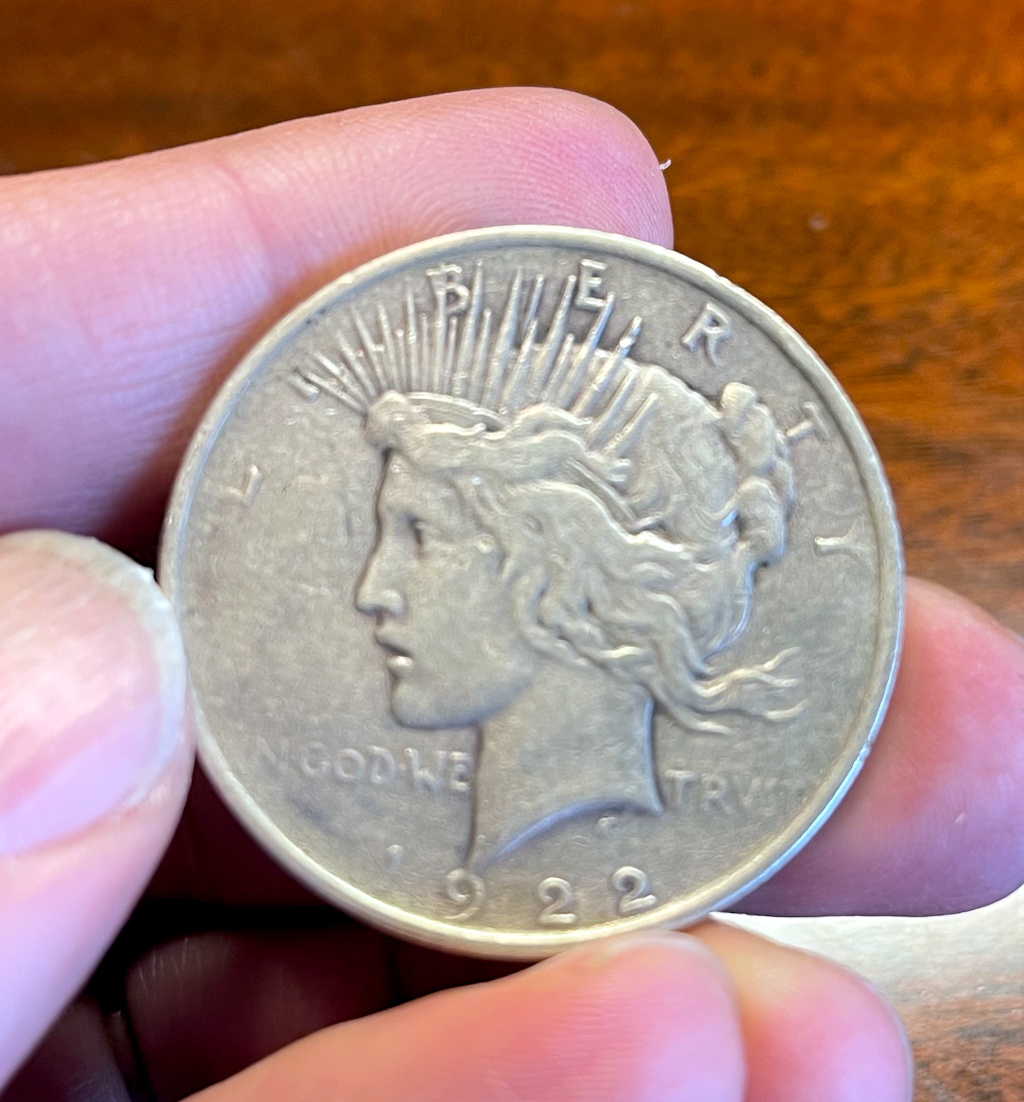
Rowling is very much limited to the seven Harry Potter books, and I still look on them fondly. My least favorite, Book 5, gave us a peek into the mind of the author more than the others, but it does still serve as a bridge between the characters’ youth and their maturity.
Until I can come up with something better, I am going to allow myself to like a particular work separately from its creator, but when I learn that someone doesn’t live up to my standards of “minimally viable human being” I will vote with my wallet and do my best to avoid giving them money. For example, I watched the Ender’s Game movie on a plane figuring the cost was already built into the cost of my ticket and whether or not I watched it wouldn’t change anything.
And I’m also going to cherish those creators who both make beauty and live beautiful lives. Bill Waterson once again comes to mind. I can only hope I can follow their example.